
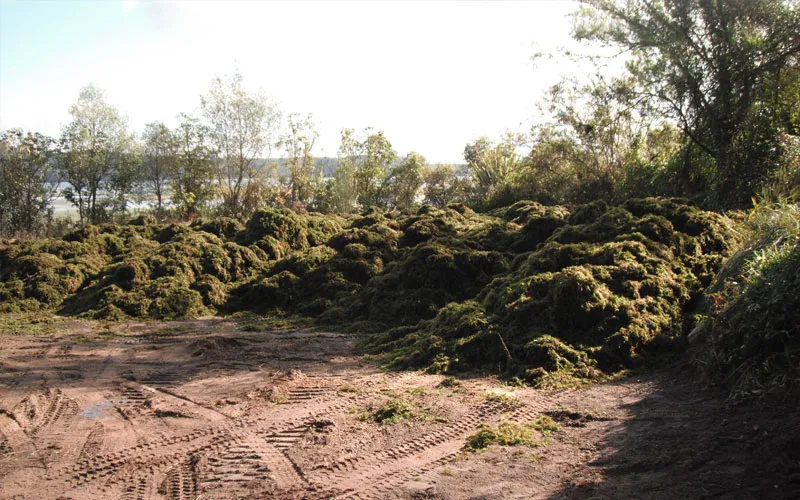
Last week we met the managing director of Lakeweed Harvesters & Contractors to access if we could benefit from a weed harvester on Lake Dunstan. There was a lot of positives to investing in this machinery but also some concerns.
We are currently in talks with LINZ, Contact Energy and the council to access the risk of spreading Lagarosiphon downstream of the dam. Lagarosiphon management costs NZ millions every year and we don't want to increase this cost. Lagarosiphon is already between the Clyde and Roxburgh Dam but currently not lower downstream.
The company we met with currently work on the Rotorua Te Arawa Lakes and a 2020 report accesses the effectiveness of weed harvesting to control aquatic weeds. To read the article and summary, click 'Read more'.
Rotorua Te Arawa Lakes Aquatic Plant Management Plan
Summary:
The Rotorua Te Arawa Lakes Programme, a partnership between the Bay of Plenty Regional Council (BOPRC), the Rotorua Lakes Council and Te Arawa Lakes Trust, is responsible for restoring and protecting water quality in 12 of the Rotorua Lakes. Aquatic weeds have been present in the lakes since 1950s and include Hornwort, Lagarosiphon, Egeria and Elodea. The main drivers of aquatic weed management are amenity, biosecurity and nutrient management. both Lagarosiphon and Hornwort impede irrigation, drainage and block the hydroelectric dams.
Control methods include chemical (herbicides), mechanical harvesting and barriers. Using a weed harvester was trailed in 2006 to establish how effective it could be on reducing aquatic weeds and therefore lowering nitrogen and phosphorus levels in the water. To date, 22,300 tonnes of weed have been removed from Lake Rotoehu and Rotoiti. This has also resulted in 27,324kg of nitrogen and 3,886kg of phosphorus being removed at the cost of $1 million.
The BOPRC's next stage is to assess weed harvesting on Lake Rotorua to remove 50 tonnes of Nitrogen. The current weed beds are not dense enough to warrant harvesting whereby only 73-98kg of nitrogen would be removed. They however are monitoring the lake and will harvest when appropriate.