
New Zealand has been isolated from the rest of the world for around 60 million years meaning 80% of trees, ferns and flowing plants are only found in New Zealand (endemic). However, since humans arrived 800 years ago, 65% of our land has been cleared and converted for human occupation and use.
Habitat loss in the region started with forest fires lit by early Māori to flush out Moa for hunting and easing travel. Forests that once cloaked the landscape were replaced with shrub and tussock grasslands as a result. The land never returned to the forest as farming and mining practices were introduced to NZ by Europeans and subsequent pests have prevented kept the land sparse of native plants. Remnants of our native local ecosystems are now forced to occupy areas humans and pests have not yet infiltrated to survive. In Cromwell, many of our endemic species now cling to the rocky gullies and steep slopes of the region to avoid the grazing activity of pests and farming practices.
Our reforestation project is focused on restoring pockets of shoreline along Lake Dunstan to one that is healthy and occupied by native species. We will work to remove introduced pest species such as willow, lupins and gorse and promote the growth of endemic and locally found plants from the region. For over 30 years, our shoreline has been at the mercy of flooding, rabbits, wind, scorching sun and low rainfall. All these factors make growth rates and success difficult as there are poor nutrient and irrigation properties along the shoreline. To overcome this, restoration must be done at the right pace with much patience.
Species at McNulty Inlet
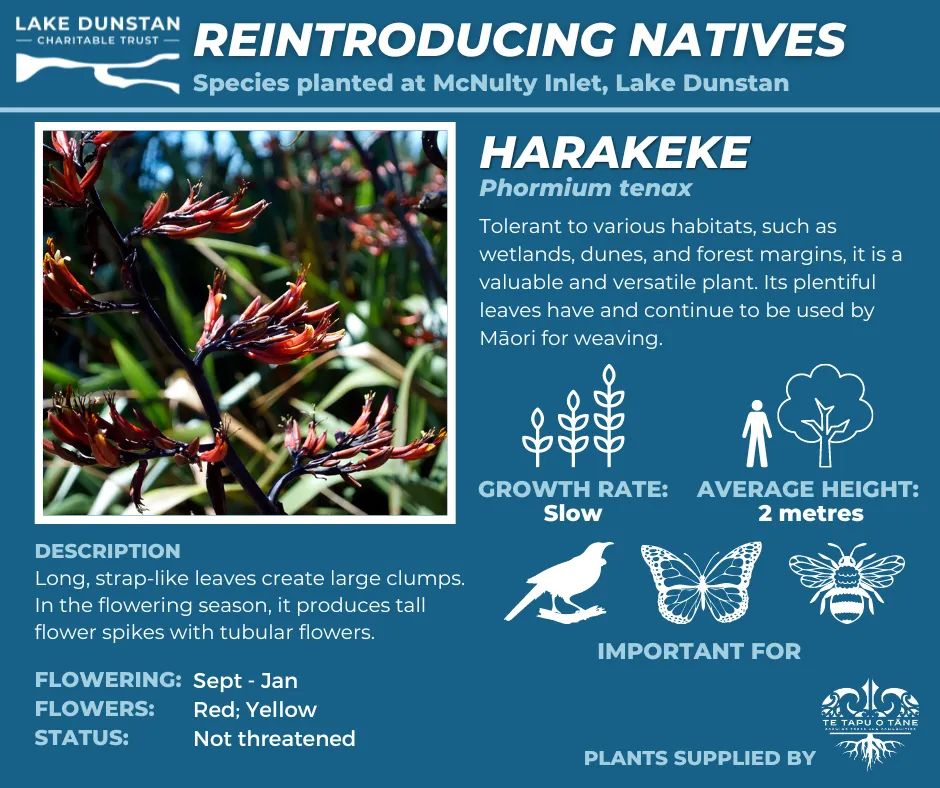
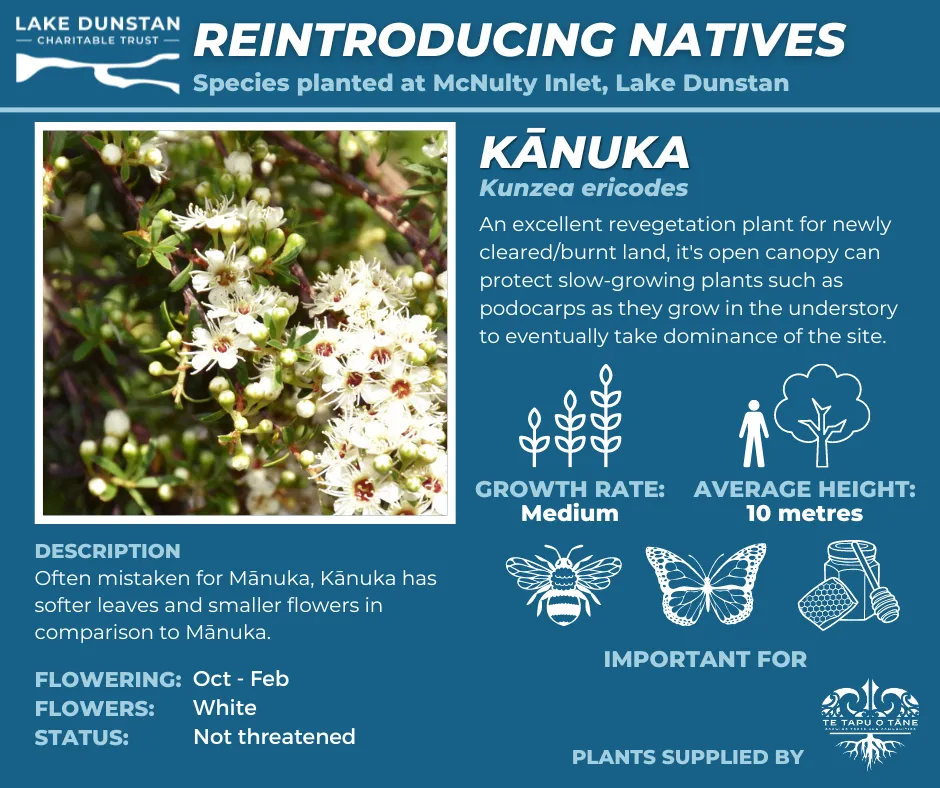
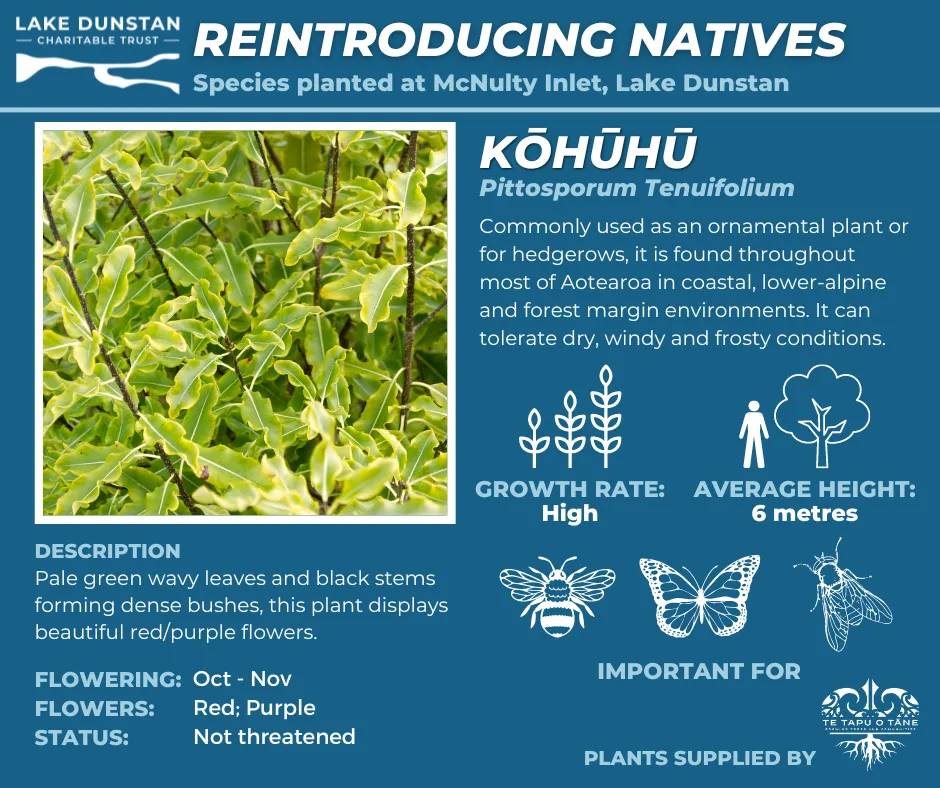
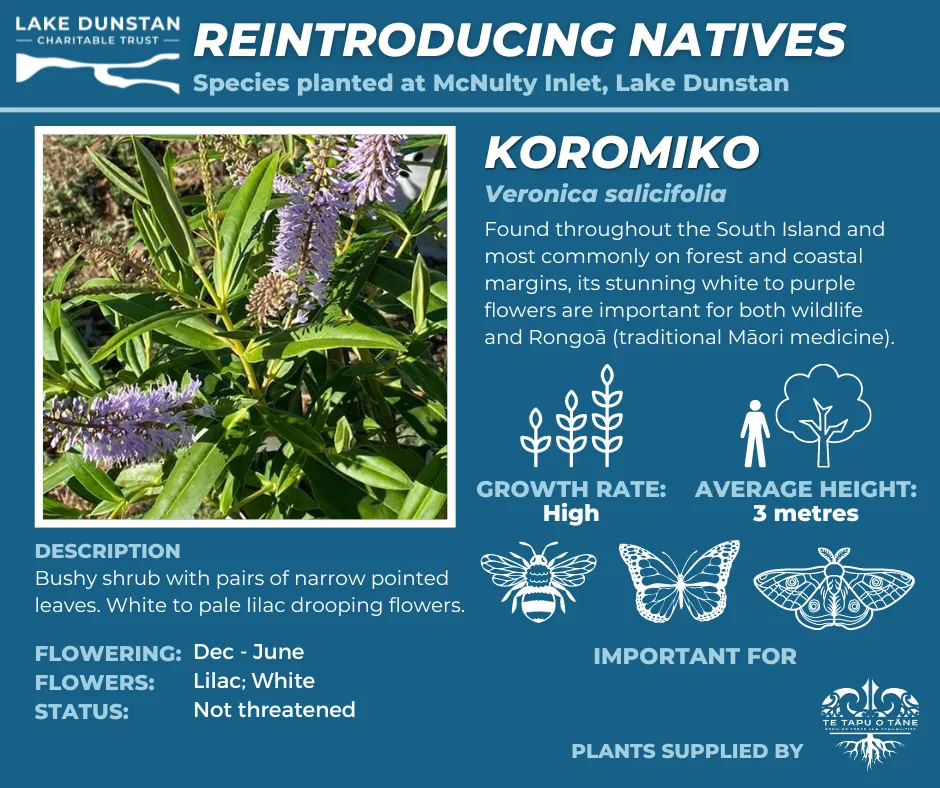
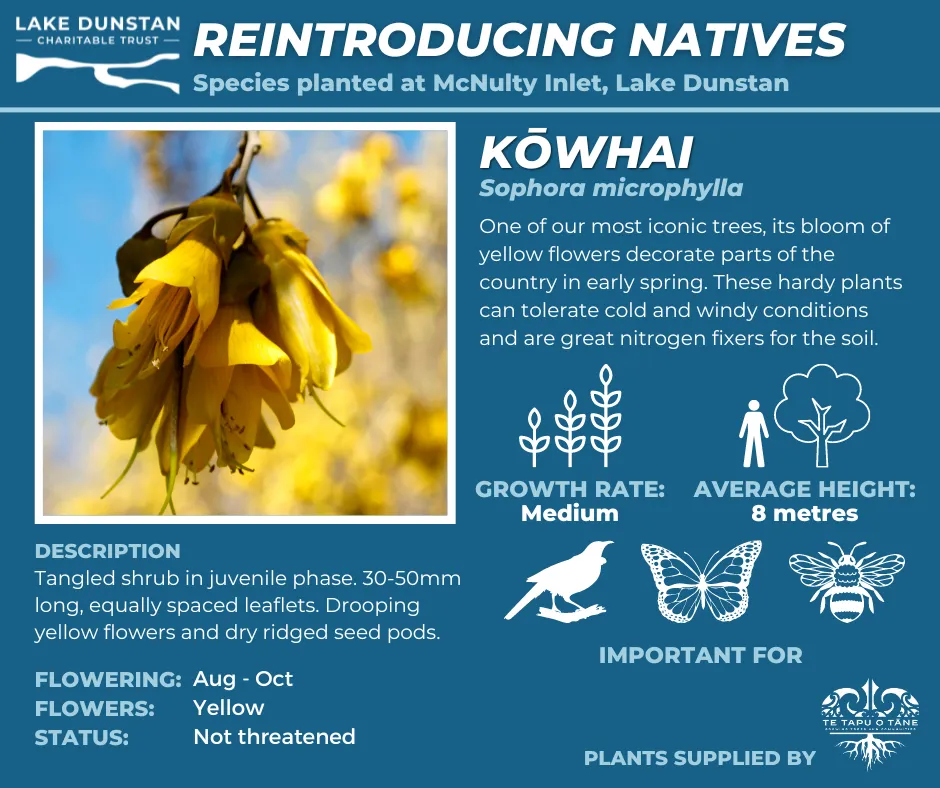
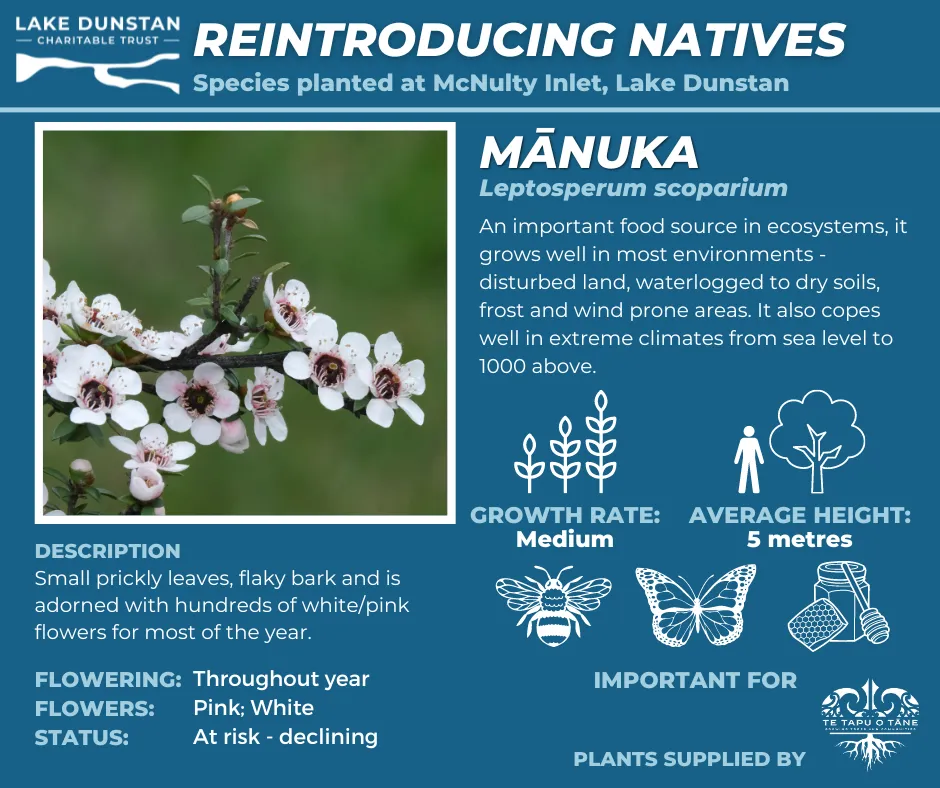
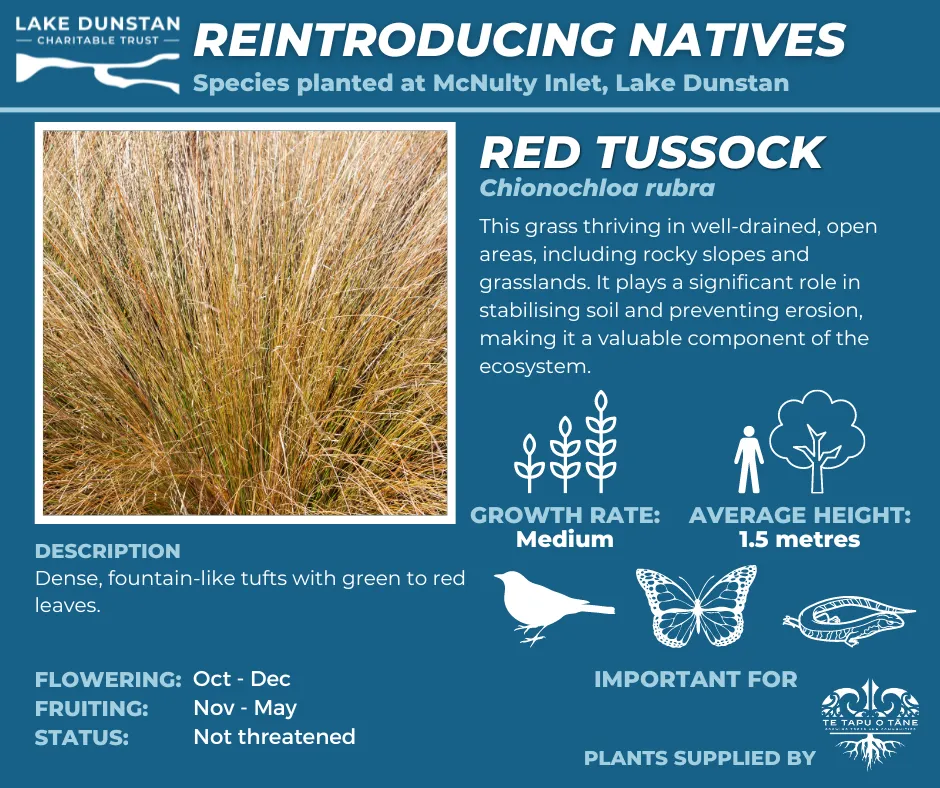
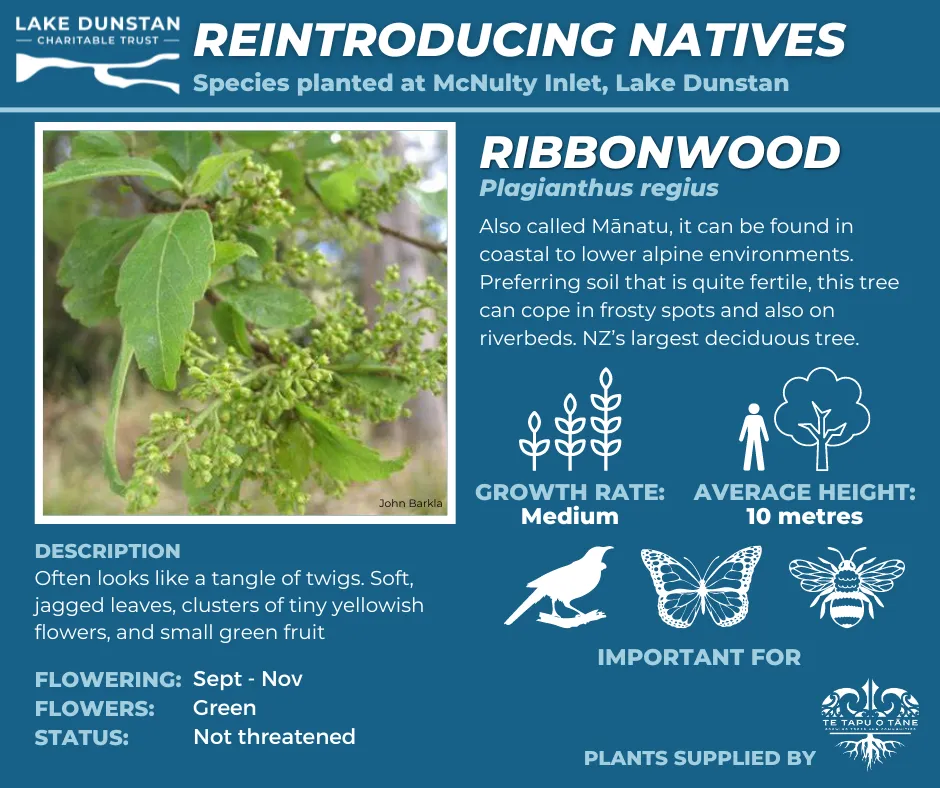
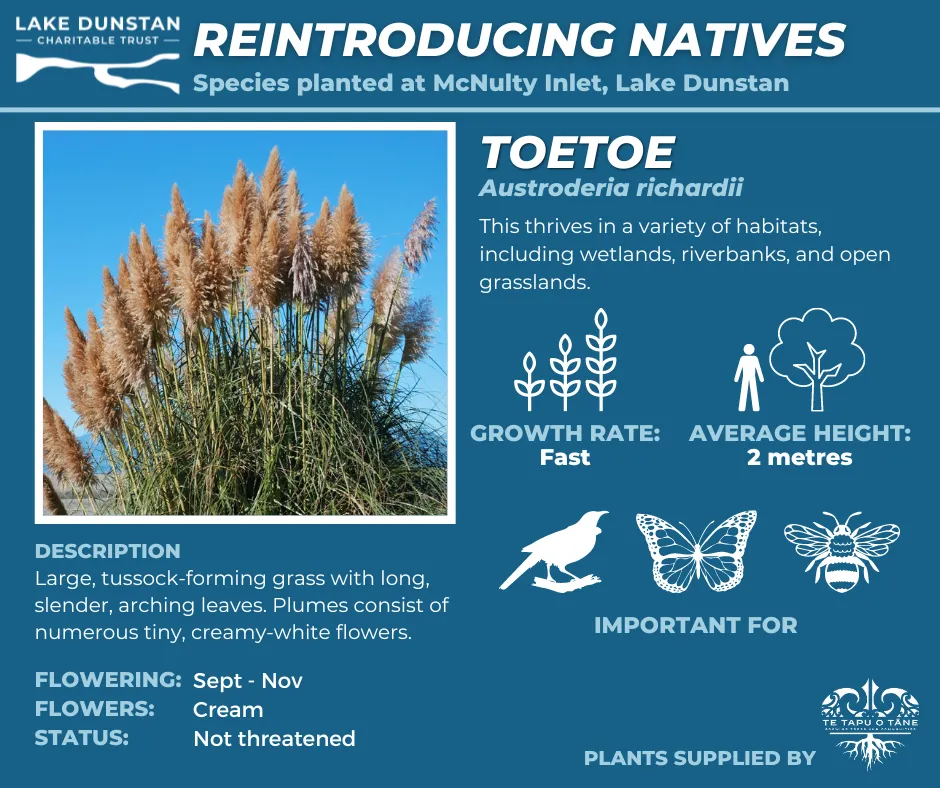
Species found in Central Otago
Below are some of the species that can be found and also cope with the Central Otago climate. Some of these are already in some of our planting sites and we hope to install more in time as the natural succession of the habitat transforms from barren soil to shrubland or event forest!
Low shrubs
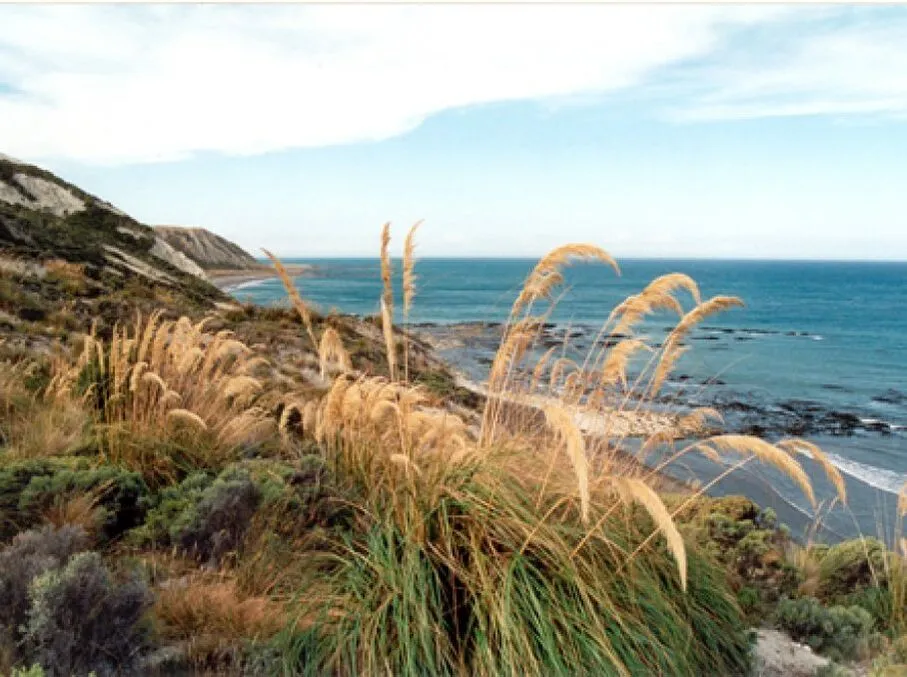
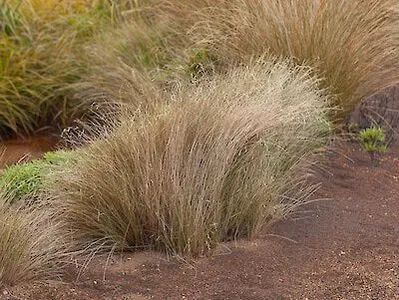
Toetoe
Austroderia richardii
Status: Not Threatened
Distribution: South island; uncommon in North island
Habitat: Coastal to subalpine; common on riverbanks and other wet places
Threats: None
Use: Lining walls/roofs; hunting tools
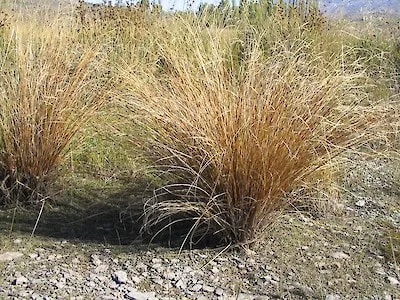
Cutty Grass
Carex buchananii
Status: At risk - declining
Distribution: Common South island; uncommon in North island
Habitat: Coastal to montane; beaches, riverbanks, damp open forests & tussock grasslands
Threats: habitat loss; grazing pests
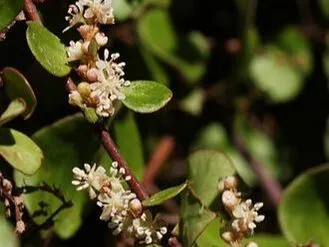
Small-leaved pohuehue
muehlenbeckia complexa
Status: Not threatened
Distribution: N,S & Stewart Island
Habitat: Coastal, lowland & montane
Threats: Possums-grazing
Use: Edible berries
Silver Tussock
Poa cita
Status: Not threatened
Distribution: North & South island
Habitat: Grasslands - lowland to montane
Threats: Grazing; Fires
Use: Medicine; rain cape; pants; sleeping mats
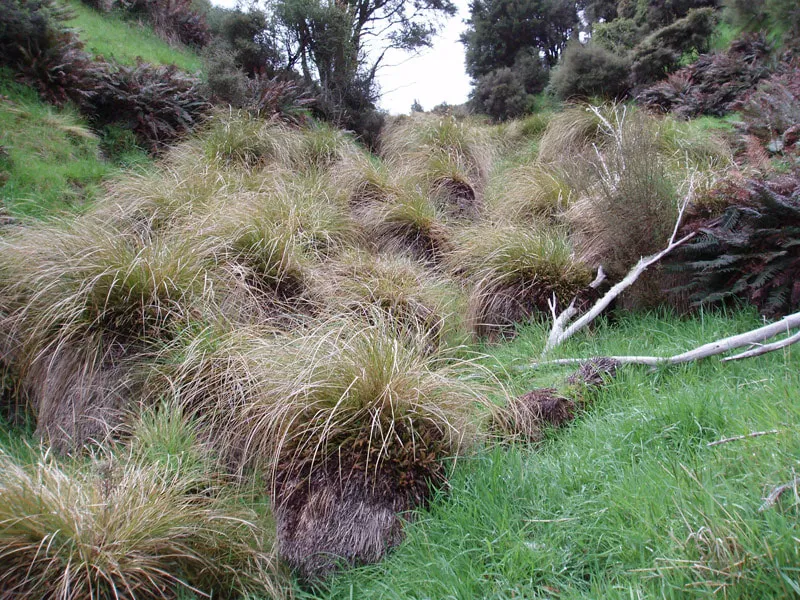
Pūrei
Carex secta
Status: Not threatened
Distribution: N,S & Stewart Island
Habitat: Common in wetlands in coastal and montane areas
Threats: None
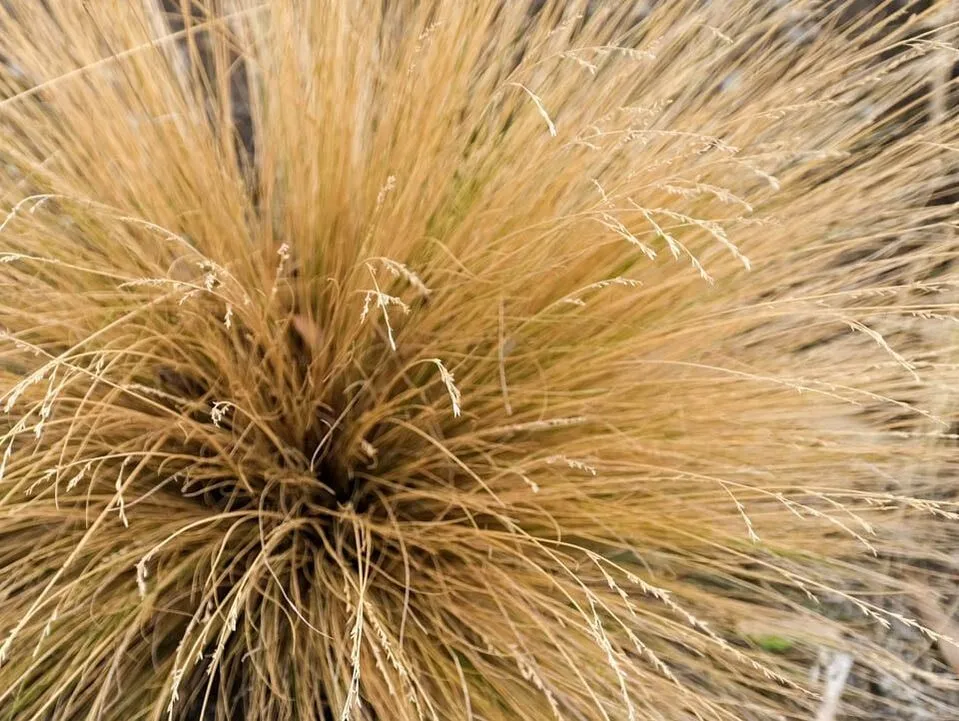
Hard Tussock
Festuca novae-zealandiae
Status: Not threatened
Distribution: Common on grasslands in Canterbury & Otago
Habitat: Tolerates poor soil and dry conditions
Threats: Grazing; Fires
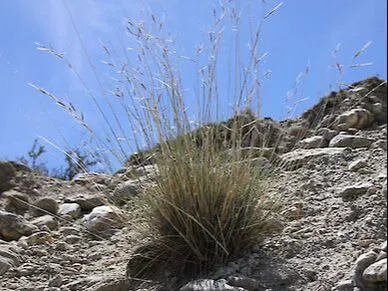
Blue Wheat Grass
Anthosachne aprica
Status: At risk - uncommon
Distribution: Central Otago
Habitat: Inland basin - tussock grasslands at 150-200m
Threats: locally endemic; habitat loss
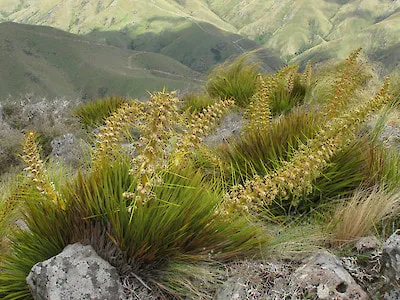
Taramea
Aciphylla aurea
Status: Not threatened
Distribution: South island
Habitat: Montane to low alpine (300-1500m); well-drained or arid soil
Threats: None
Use: food; sandals
Medium shrubs
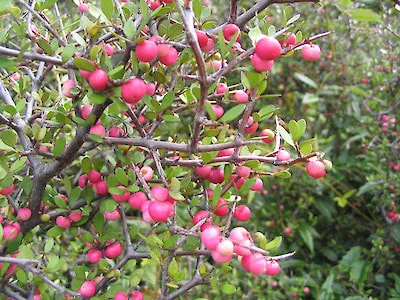
Makomako
Aristotelia fruticosa
Status: Not threatened
Distribution: N, S & Stewart island
Habitat: Lowland to subalpine forest & shrublands
Threat: None
Use: Medicine, food, dye
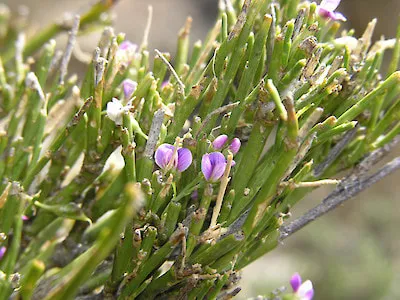
Cromwell Broom
Carmichaelia compacta
Status: At risk - Uncommon
Distribution: Central Otago
Habitat: rocky slopes/outcrops; best in sunny well-drained areas
Threat: Endemic to area; grazing
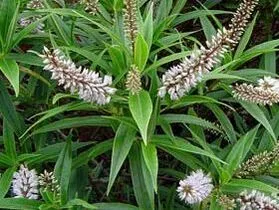
Koromiko
Veronica salicifolia
Status: Not threatened
Distribution: S & Stewart island
Habitat: coastal to montane;
Threat: None
Use: Medicine - stomach issues; ulcers; wounds
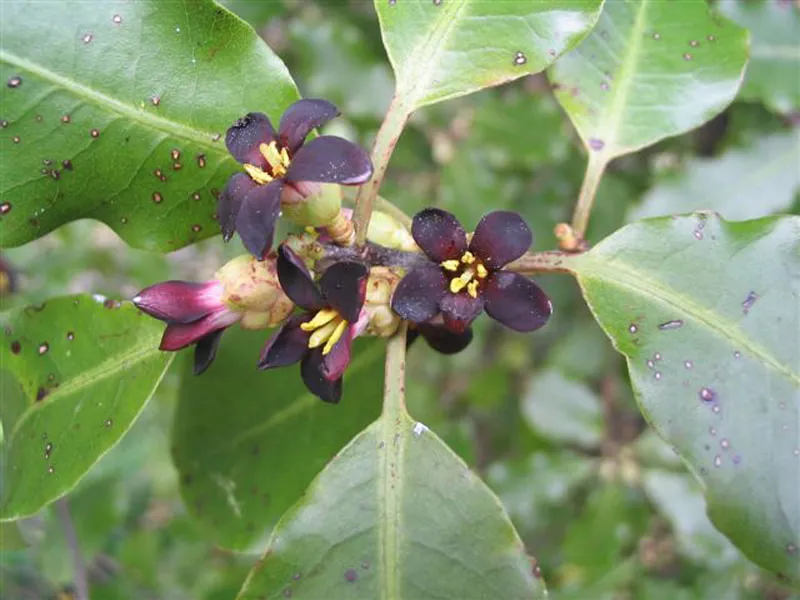
Kohukohu
Pittosporum tenuifolium
Status: Not threatened
Distribution: N,S & Stewart island
Habitat: Coastal to montane shrubland & forests
Threat: None
Uses: Medical - masticatory
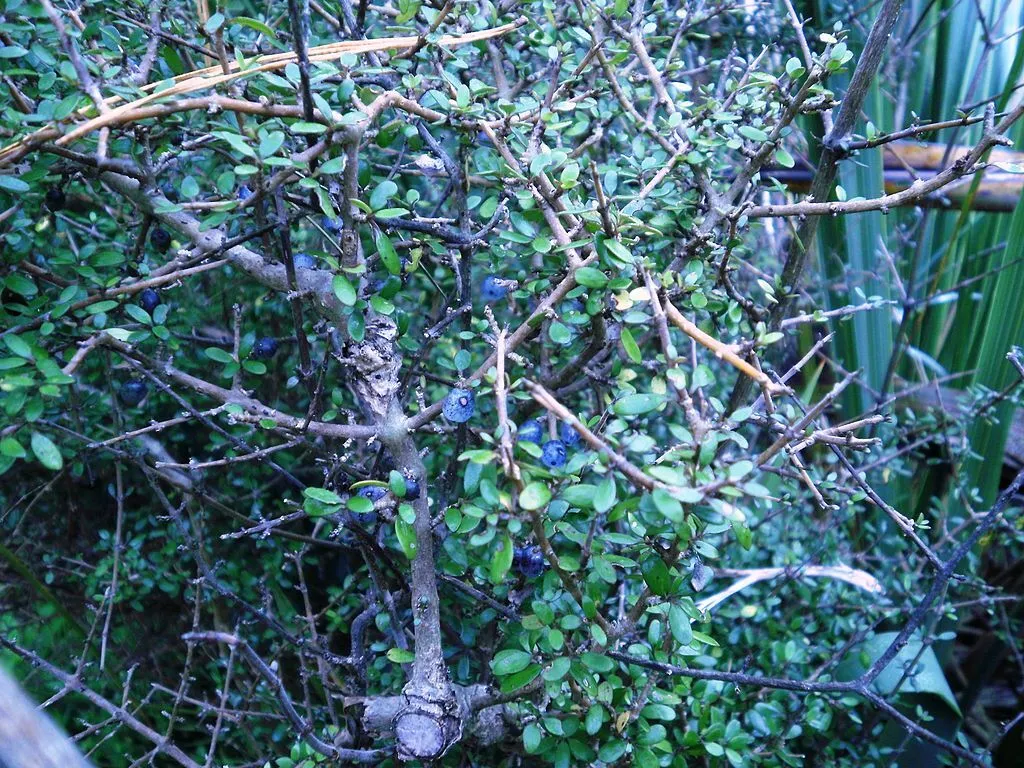
Mingimingi
Coprosma propinqua
Status: Not threatened
Distribution: N,S & Stewart island
Habitat: forests; shrubland; water edge; rocky areas
Threat: None
Use: Medicine - baldness; headaches; influenza
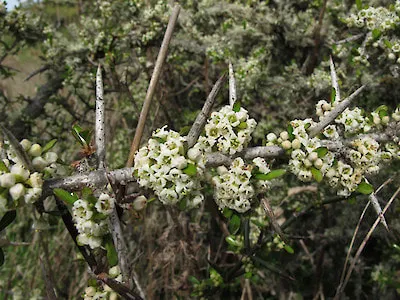
Matagouri
Discaria toumatou
Status: At risk- declining
Distribution: S island; uncommon in N island
Habitat: short tussock grasslands; riverbanks; sand dunes; copes well in nutrient-poor soil
Threat: possums; farming- clearing/maintaining pastures
Use: tattoo needles
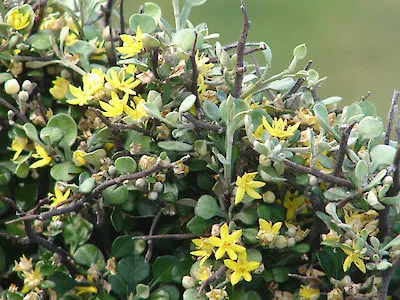
Korokio
Corokia cotoneaster
Status: Not threatened
Distribution: N & S island
Habitat: Common in stony & dry areas; can tolerate poor, dry soils and exposure
Threat: None
Use: fish hooks; medical -surgical knives, stomach issues
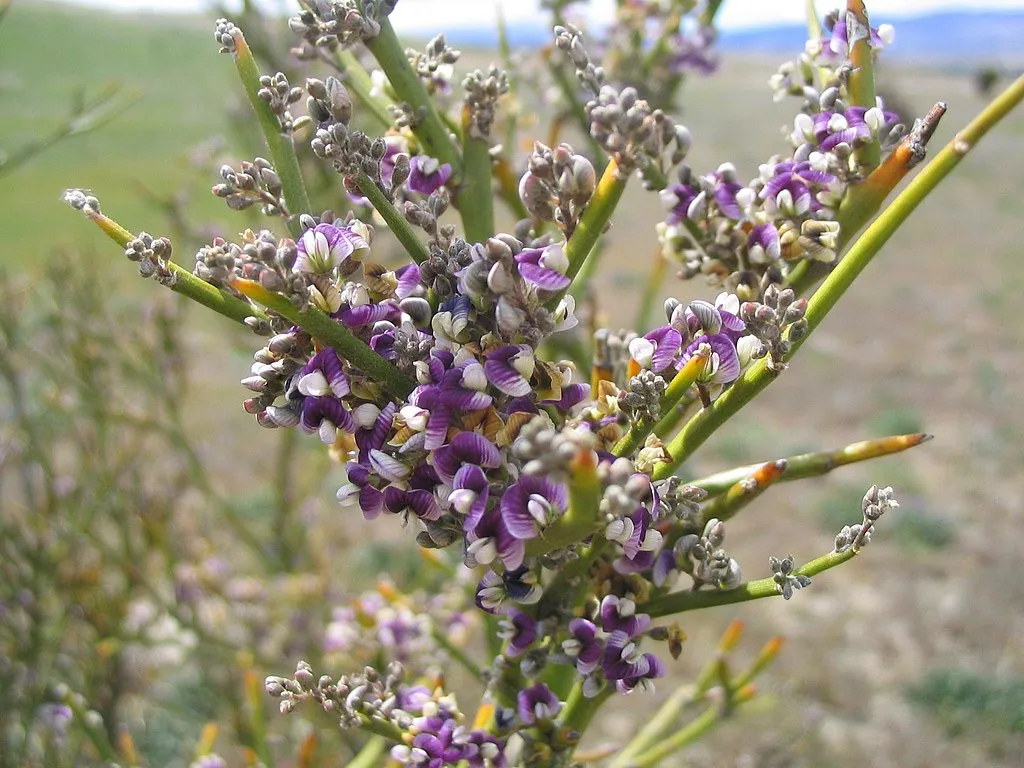
Desert Broom
carmichaelia petriei
Status: At risk - declining
Distribution: S & Stewart island
Habitat: Coastal to montane; rocky/steep grass & tussock grasslands
Threat: habitat loss & modification
Large scrubs and trees
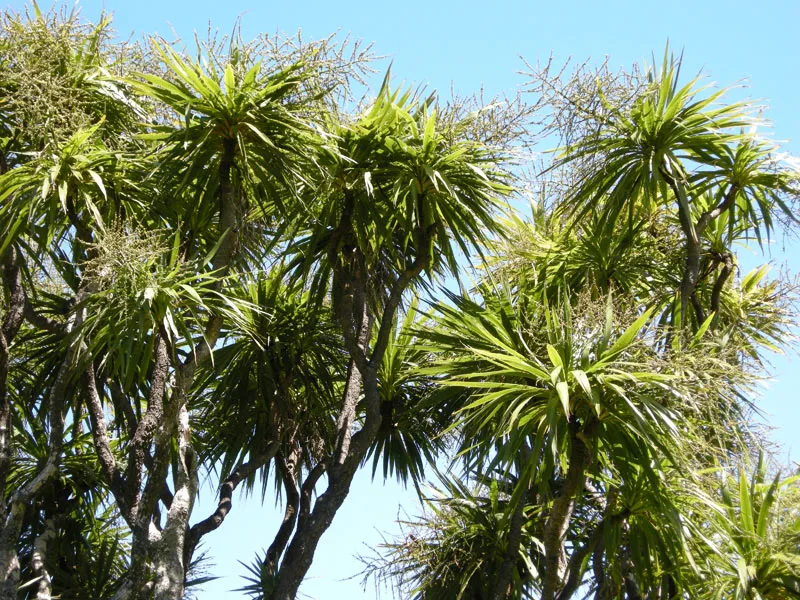
Tī Kōuka
Cordyline australis
Status: Not threatened
Distribution: N,S & Stewart island
Habitat: Coastal to montane; copes well in most conditions
Threat: Disease - Sudden decline
Use: Food; fishing line; mats; baskets; sandals; medicine - tonic, wounds, stomach issues, colic
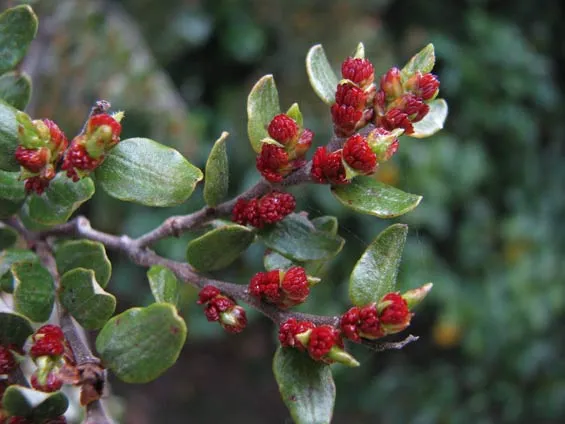
Mountain Beech
fuscospora cliffortioides
Status: Not threatened
Distribution: N & S island
Habitat: Montane and subalpine
Threat: Grazing pests; habitat loss; fire
Use: Timber
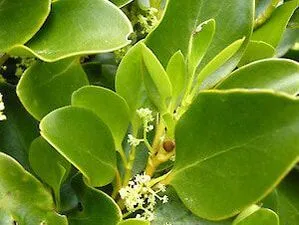
Pāpāuma
Griselinia littoralis
Status: Not threatened
Distribution: N, S & Stewart island
Habitat: Coastal to montane; tolerates wind, cold temps & poor nutrient soil.
Threat: Grazing pests
Use: Medicine - skin infection
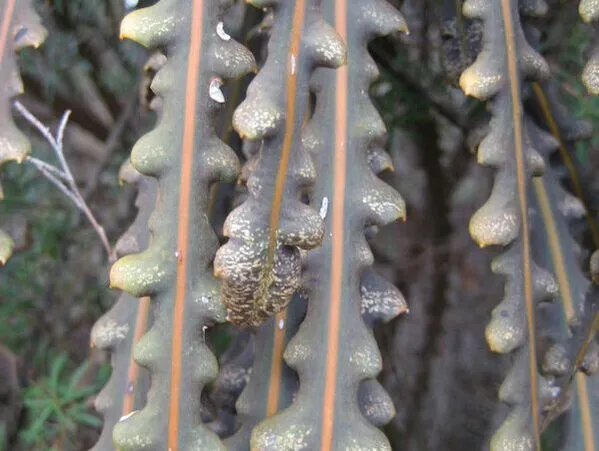
Horoeka
Pseudopanax ferox
Status: At risk - uncommon
Distribution: N & S island
Habitat: Coastal to subalpine: prefers drier conditions
Threat: Grazing pests
Use: spears; paintbrushes
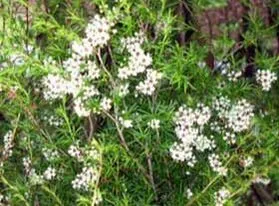
Kānuka
Kunzea ericoides
Status: Threatened - vulnerable
Distribution: S island
Habitat: Coastal to montane; shrublands; forests
Threat: farm clearing; firewood
Use: Agricultural tools; weapons; insulation; fuel; medicine - mouthwash, stomach & eye complaints
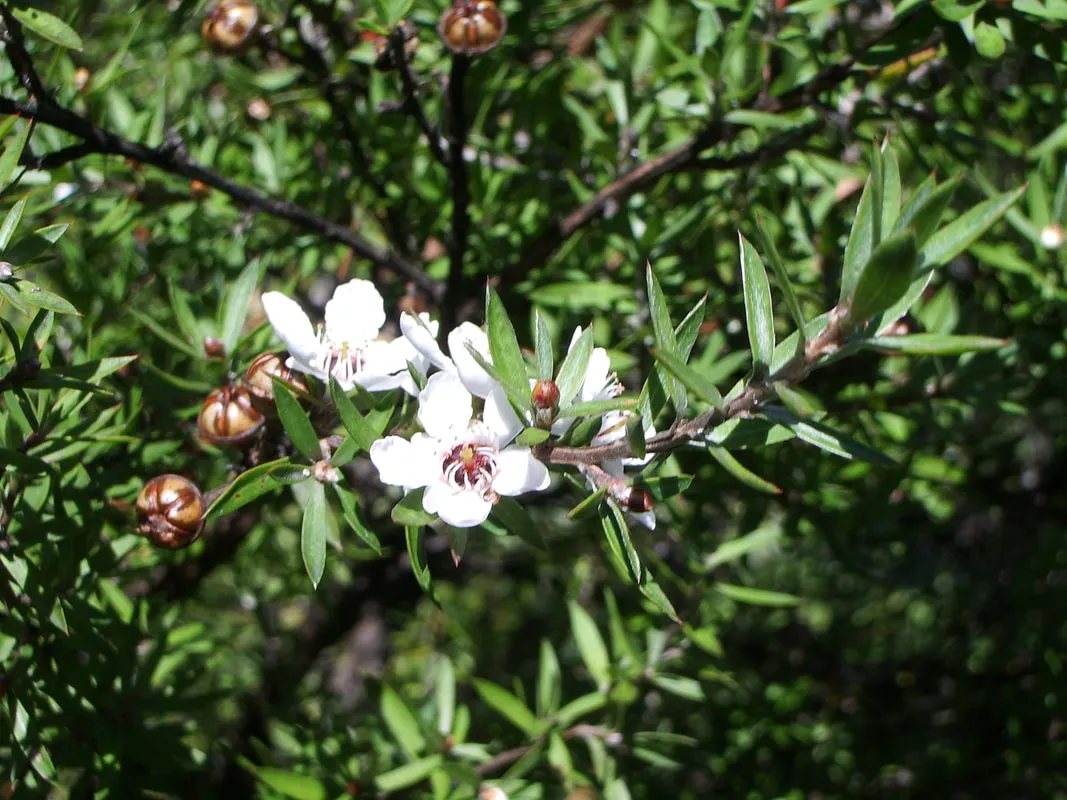
Mānuka
Leptospermum scoparium
Status: At risk - declining
Distribution: NZ & AUS
Habitat: Coastal to low alpine
Threat: Farm clearing; myrtle rust
Use: Tea; medicine - skin complaints, mouthwash
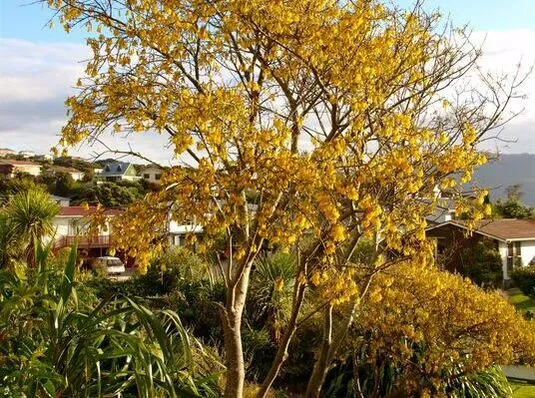
Kōwhai
Sophora microphylla
Status: Threatened
Distribution: N & S island
Habitat: riverbanks; cliffs; shrubland
Threat: Habitat loss
Use: Building; snares; dye; medicine - bad back, wounds, bites, muscle pain
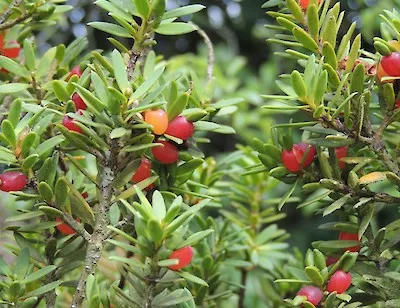
Tōtara-kiri-kōtukutuku
Podocarpus laetus
Status: Not threatened
Distribution: N,S & Stewart island
Habitat: lowland, subalpine & montane; copes well in nutrient and irrigation poor soil
Threat: habitat loss
Use: Food storage
References
Click on images for links to photo and information source
Maori use of plant information: https://maoriplantuse.landcareresearch.co.nz/WebForms/default.aspx
https://en.wikipedia.org/wiki/Griselinia_littoralis
https://www.nzpcn.org.nz/
https://www.tanestrees.org.nz/species-profiles/kanuka/
https://www.tepapa.govt.nz/discover-collections/read-watch-play/maori/maori-medicine
https://maoriplantuse.landcareresearch.co.nz/WebForms/PeoplePlantsDetails.aspx?PKey=a6dab0c5-c7b2-4fb9-afe1-c9ca94bb4426
http://www.environmentguide.org.nz/issues/biodiversity/key-threats/habitat-loss/
https://www.jstor.org/stable/26775037